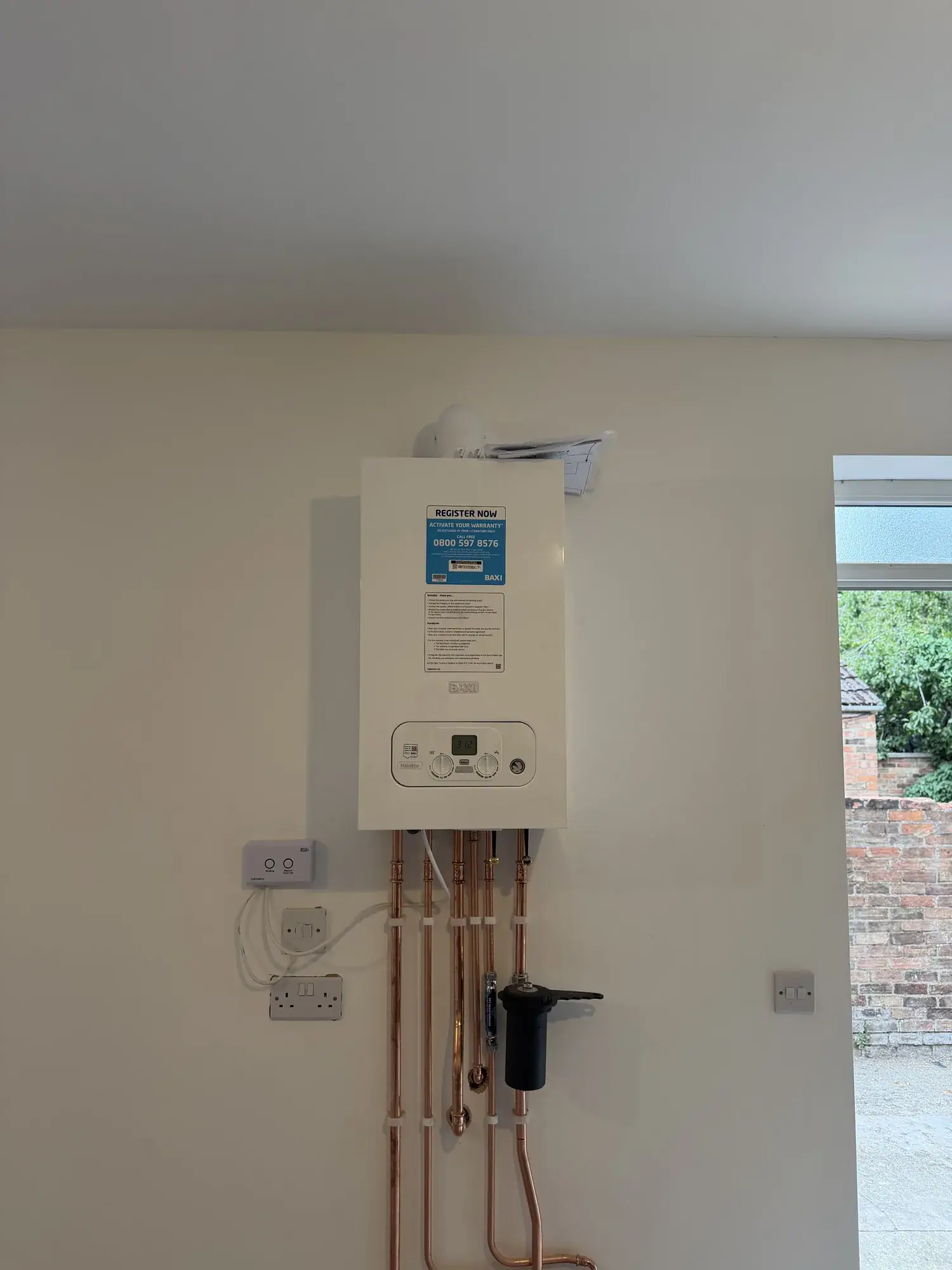
An annual boiler service checks the appliance is operating safely and efficiently. The engineer inspects the components, tests the flue gases with an analyser, checks the gas pressure and seals, and catches faults before they become breakdowns. It usually takes around an hour, is often a condition of the manufacturer warranty, and costs £120 to £350. Landlords also need a separate annual gas safety check, which produces a CP12 certificate.
Ask ten people what happens during a boiler service and most will describe a man looking at a boiler for ten minutes and writing something on a pad. It is a fair suspicion, because a bad service really can look like that. A proper one does not. The casing comes off, the burner and heat exchanger get inspected, and a calibrated analyser goes into the flue to read exactly what the boiler is producing when it burns gas.
That last part is the bit that cannot be faked or eyeballed, and it is the reason the service is worth booking. Here is what actually happens, in order.
What the Engineer Actually Does
Every service follows the same sequence, whether the boiler is two years old or twelve.
- The visual inspection first, before anything is touched. The boiler is checked for leaks, corrosion and scorching. The engineer looks at where it is sited, at the ventilation around it, and at the flue inside and outside the property, including the terminal and the seals where it passes through the wall. A flue that has slipped or a blocked terminal is a serious fault, and it is found by looking.
- The casing comes off and the components are checked. This is the part that separates a real service from a glorified once over. The burner, heat exchanger, injectors, electrodes and the condensate trap are inspected and cleaned where needed. The condensate trap in particular collects debris and is a common cause of winter lockouts.
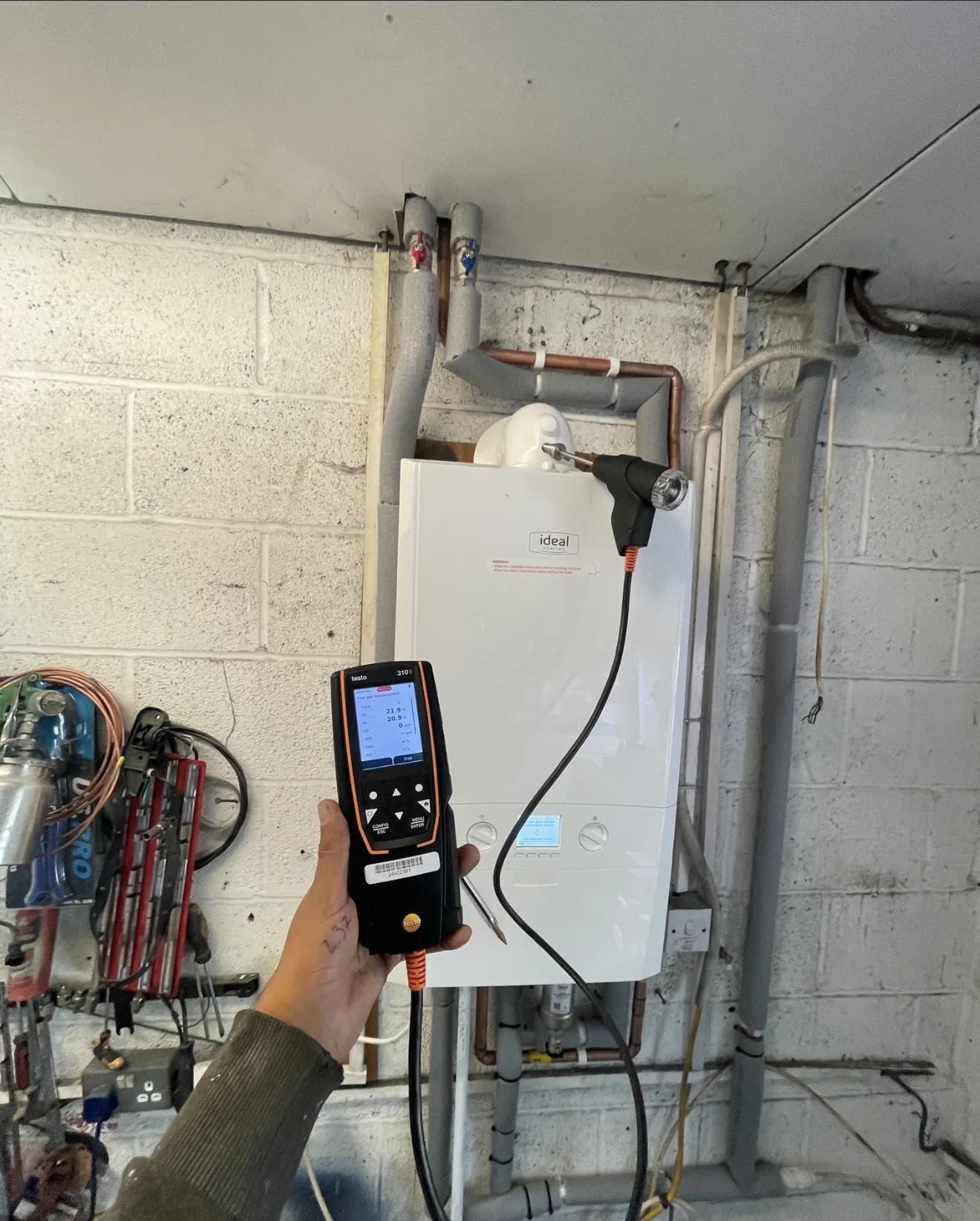
- Flue gas analysis with an electronic analyser. A probe goes into the flue while the boiler runs, and the analyser reads carbon monoxide, carbon dioxide and the CO to CO2 ratio. Those numbers are compared against the manufacturer's stated figures for that model. They tell the engineer whether the boiler is burning gas cleanly and safely, which nothing else on the job can tell you. The readings are recorded on your service record.
- Gas pressure, gas rate and seal checks. The engineer confirms the boiler is receiving the correct gas pressure and burning at the correct rate, checks the case seals are intact, and tests the gas tightness of the installation. A boiler burning at the wrong rate is either wasting gas or failing to heat the house properly.
- Safety devices and controls tested. The pressure relief valve, thermostats, overheat protection and flame supervision are checked, along with the system pressure and expansion vessel charge. The engineer then runs the boiler through heating and hot water via your timer and room thermostat, to confirm the whole system responds as it should rather than just the appliance.
- The write up. You get a record of what was checked, the analyser readings, anything found that needs attention, and a clear note if something is recommended rather than urgent. If we find a fault we will tell you what it is, what it costs to put right, and whether it can wait.
Due a Service This Year?
Boiler servicing is £120 to £350 depending on the appliance and what is involved. Call Hasan on 07519 848846 to book a slot across Bedford, Kempston, Milton Keynes and the surrounding villages.
Book Your ServiceHow Long It Takes and What We Need From You
A standard annual service takes roughly an hour. A first service on a boiler we have not seen before, or one that turns up problems, can run longer.
- Around an hour on site. Anything much under half an hour on a boiler that needed cleaning should make you ask what was skipped. Anything longer usually means a fault has been found and is being investigated.
- Clear access to the boiler. The casing has to come off, so we need room to work in front of it. If it is in a cupboard, moving the contents out beforehand saves time on the day.
- Someone at home, and where the gas meter is. We need access to the property and usually to the gas meter, the controls and the flue terminal outside.
- Your paperwork if you have it. The boiler manual, previous service records and the installation certificate all help, particularly if the boiler is still under warranty.
- Heating off beforehand if you can. The boiler needs to be cool enough to work on safely, so switching the heating off an hour or two before helps things move along.
Why Your Warranty Usually Depends On It
Modern boilers often carry warranties of five, ten or even twelve years. Almost all of them come with a condition attached, and it is the one most people forget.
- Annual servicing is normally a warranty condition. Manufacturers typically require the boiler to be serviced every twelve months by a Gas Safe registered engineer, with the service recorded. Miss a year and a claim can be refused, even for a fault that had nothing to do with maintenance.
- The record is what proves it. Keep your service records and your installation certificate together. When a manufacturer asks for evidence of servicing history, a gap in the paperwork is treated as a gap in the servicing.
- Home insurance can ask too. Some policies expect gas appliances to be maintained properly, and a claim involving an unserviced boiler can be harder to make.
- Small faults stay small. A corroding seal, a clogged condensate trap or a slipping expansion vessel charge are all cheap to sort at a service. Left alone, each of them can turn into a call out in the middle of January.
A Service and a CP12 Are Not the Same Thing
This causes genuine confusion, particularly for landlords and letting agents, and getting it wrong can mean paying twice or falling short of your legal duties.
- A service is about condition and efficiency. It is a maintenance job. Components are inspected and cleaned, combustion is measured and adjusted, and the appliance is set up to run as it should. It is recommended by manufacturers rather than required by law.
- A landlord gas safety check is about safety, and it is a legal duty. If you let a property, every gas appliance and flue must be checked for safety every twelve months by a Gas Safe registered engineer. That produces a landlord gas safety record, the certificate everyone calls a CP12. A copy goes to the tenant, and you keep one.
- A CP12 does not include a service. The safety check confirms the appliance is safe to use. It does not involve the cleaning and adjustment that keeps the boiler efficient, and it will not satisfy a manufacturer warranty that requires annual servicing.
- Doing both together is the sensible route. We carry out the service and the safety check on the same visit for landlords, letting agents and property managers, which is cheaper and easier to keep track of than two separate appointments.
Why Booking Before Winter Is Better
There is a reason we say this to every customer in September, and it is not simply to fill the diary.
- Faults get found before you depend on the boiler. Most boilers fail on the first hard cold spell, because that is the first time they are asked to run flat out for days. A service in September finds the weak component while you can still live comfortably without heating for an afternoon.
- You are not competing for an emergency slot. In December every heating engineer in Bedfordshire is booked solid. A service booked in autumn happens at a time that suits you rather than at the back of a queue.
- Parts arrive faster out of season. If your boiler needs a component, ordering it in the autumn is straightforward. Ordering the same part during a cold snap, when every merchant is being asked for it, is not.
- An efficient boiler costs less to run over the months that matter. Combustion set up correctly before the heating season means you are not paying for wasted gas across the whole winter.
- If the worst does happen, we offer 24 hour callouts. That is the safety net, not the plan. A serviced boiler is far less likely to need it.
Frequently Asked Questions
Usually around an hour. That covers the visual inspection, taking the casing off to check and clean the components, flue gas analysis, gas pressure and seal checks, testing the safety devices and controls, and writing up the record. It takes longer if the boiler has not been serviced for some years or if a fault turns up that needs investigating.
Boiler servicing with us is £120 to £350. Where you sit in that range depends on the type of boiler, how accessible it is, and whether the visit also covers a landlord gas safety check or additional appliances. We confirm the price before we book the appointment, so there is no surprise on the day.
No. The landlord gas safety check is a legal requirement carried out every twelve months on every gas appliance in a let property, and it produces the certificate commonly known as a CP12. It confirms the appliance is safe. A service is maintenance: cleaning, checking and adjusting the boiler so it runs efficiently. Landlords generally need both, and we can do them on the same visit.
Yes, for two reasons. The first is that most manufacturer warranties require an annual service by a Gas Safe registered engineer, and missing one can invalidate a claim. The second is that combustion problems are invisible: a boiler can look and sound perfectly normal while producing carbon monoxide, and the only way to know is to read the flue gases with an analyser.